
by Joseph Nangle, OFM
Pax Christi USA 2023 Teacher of Peace
Sunday, October 20, marks two observances, one Catholic and the other Methodist which together offer rich and vital reflections for Christians. The Catholic observance on every third Sunday in October is World Mission Sunday; the Methodists’ is Laity Sunday.
“Laity in Mission” is an apt title for modern Christians. We have come to understand that the “rank and file,” “folks in the pews” must be the principal bearers of Christ’s message to the world, if only because of their sheer numbers – but essentially, because of their baptismal vocations.
[The purpose of World Mission Sunday surely includes acknowledging the traditional understanding of the missionary vocation – bringing Christ to places in the world still not evangelized. Today it is clear that the Lord’s Spirit has always been in those places. The missionary task there is witnessing to that fact, celebrating it, and when appropriate, inviting populations there to a more intimate relationship with the Savior.

A wonderful example of this renewed foreign missionary vocation is Maryknoll Father Bob McCahill. Every Christmas his annual letter appears in the National Catholic Reporter, describing his daily life among Hindus and Muslims in Bangladesh where he has witnessed to the Gospel for several decades. His constant theme is, “We all belong to God.”]
Missiology, the theology of mission, has expanded exponentially since Vatican II. That epochal event might well have been called “The Council of the Laity.” With its paradigmatic statement to the People of God, “We Are The Church,” the lay vocation took on a decidedly missionary dimension.
As set out in the conciliar Decree on the Apostolate of the Laity, the Council declared that the marketplaces of the world where lay women and men mostly spend their lives are missionary destinations. That is, the myriad working realities which lay people enter virtually for their entire lives are opportunities for Gospel witness. The family above all, then classrooms, factories, corporate offices and boardrooms, public transportation, stores, hospitals, nursing homes, and numerous social circles are all real life situations that require more than ever in our increasingly harsh and divisive society the kind of Gospel presence Christian-Catholics bring to them.
Frequently, lay people in the world face special challenges and demands: when their working environments are places of discrimination, harassment, racism; and when the entire structure of a given business subsists on systemic injustices. (Think of cigarette manufacturers who profited from the sale of their seriously unhealthy product long after it was proven to be death-dealing.)
In #7 of that Conciliar Decree, the lay missionary vocation was put simply and clearly: “The laity must take on the renewal of the temporal order as their own special obligation.”
Here we place this aspect of this missionary role of the laity ahead of their call to “churchy” ministries because the world beyond the church is the prime area for it. Still, lay engagement in affairs of the institutional church obviously demands attention. This is what Pope Francis’s Synod is attempting to bring about with even greater emphasis in today’s post-Vatican II Catholic Church. Parish and diocesan councils and positions assigned to lay women and men at higher levels of the institutional church have implemented this vision set out by the Council. However, we hope the Synod will declare that much more in this regard must happen for the Church to truly be “the People of God” at every level.
Finally, a word about the pastoral vocation in this context – the role of deacons, priests, vowed religious and bishops. Their principal responsibility is to accompany the laity in their vital missionary work. They have a secondary, and essential role to support, encourage, inspire, pray with, counsel those who enter the everyday world as peers and prophets. This vision of pastoral ministry is itself enormously rewarding for us who are called to it.
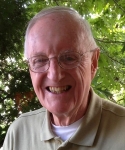
Joe Nangle OFM is a Pax Christi USA Ambassador of Peace and the 2023 Pax Christi USA Teacher of Peace. As a member of the Assisi Community in Washington, D.C., he is dedicated to simple living and social change. Joe also serves as the Pastoral Associate for the Latino community at Our Lady Queen of Peace, Arlington, Virginia.
Thank you for this wonderful article, and all you do to promote the service we are all called to give.
If people with a wide range of healing gifts ministered to those in war zones abroad and inner cities at home then needs for healing of body and mind would begin to be realized. Conventional evangelization is obsolete by method , goal and bureaucracy in my opinion. It’s not marketing of religion that’s needed. Consider that God is in everything. That realization is made possible thorough Compassion and Justice . The delivery of healing is essential to respond to this. Board Rooms would be hostile to this plan. They are the one who need it the most.