
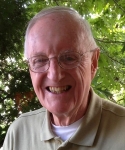
by Joseph Nangle, OFM
Pax Christi USA 2023 Teacher of Peace
This week’s reflection will be done in the first person (something I generally avoid). It concerns a person who caused a life-changing turn in my life and who now is nearing death, Peruvian theologian and Dominican friar Fr. Gustavo Gutiérrez.

I came to know Gustavo in 1968, when he already was recognized as an outstanding scholar. He invited me with dozens of other ex-patriot priests working in Peru to weekly conversations centered on our pastoral work.
From the beginning Gustavo’s methodology gave evidence of what would become known as Liberation Theology, although at that time the phrase had not as yet been articulated.
He would invite us to share our day-to-day experiences as parish priests – the ordinary and sometimes dramatic events in our ministries. He was a great listener and for an hour or more at these meetings never interrupted us.
Toward the end of our sessions then, he would summarize what he had been hearing, but never correcting us or giving directions as to how we should be conducting our parish work. Instead, he would tell us that what we were sharing was the “raw material” of his theological reflections.
Looking back on these weekly meetings, it is clear, whether or not any of us realized it, that a new theological methodology was emerging, one that was simple and profound: an inductive, “reality to conclusions” process rather than the traditional deductive approach which repeated the tenets of the faith and applied them to every given situation.
A back story about this “new way” was one I heard years later. According to this account, several Latin American priests who had been sent to study theology in academic centers of Europe during the 1960s (the years of Second Vatican Council), returned home and began teaching. They quickly saw that “were answering questions no one was asking.” That gave rise to the obvious question: where does one begin to theologize in a way that is pertinent, appropriate, relevant to Latin America?
Gustavo Gutiérrez was a leading figure in this process. He discerned that lived experience, reality, what is going on, is a proper starting place for theological reflections which then had the task of wrestling with the follow up question, “What does God’s word have to say about each of these situations.” His questioning extended beyond personal matters to much broader issues. Much later he would put it this way: “What do the Scriptures have to say to ‘non human beings,’ impoverished people living in a world (Latin America in this case) where they are considered useless, nameless, even non-existent?”
Gustavo began expressing that what we were doing in our sessions was elaborating a “Theology of Development.” However, as I recall, he quickly laid aside that idea and suggested that our pastoral work with and for these “non-human beings” was connected with the Exodus story in the history of salvation; that our pastoral efforts were about that same movement – from slavery to freedom and dignity. A theology of liberation!
This concept and its consequences spread quickly through the post-Vatican II Latin American Catholic Church.* Thanks in great part to Gustavo’s influence and with the backing of the institutional Church, new kinds of pastoral practices began:
- a preferential option for the poor guiding every aspect of our catechesis, sacramental life, bishops’ pastoral letters, lifestyles
- an expanded spirituality based on a reading of the Gospel in the light of “structural, systemic, institutionalized injustices”
- a growing awareness of the causes for the chasm between the “haves” and the “have nots,” both people and nations
- preaching the “full Gospel”
I and millions more were fortunate beneficiaries of this, thanks to a spirit-filled thinker and firm believer in the Word Incarnate: Gustavo Gutiérrez, OP. Bless him now as he journeys home.
*It was not by any means universally accepted, however, but that is another story.
Joe Nangle OFM is a Pax Christi USA Ambassador of Peace and the 2023 Pax Christi USA Teacher of Peace. As a member of the Assisi Community in Washington, D.C., he is dedicated to simple living and social change. Joe also serves as the Pastoral Associate for the Latino community at Our Lady Queen of Peace, Arlington, Virginia.
Thank you Joe for making our Dominican friar real.
Thank you Father Joe. God bless you, Father Gustavo for your courage and steadfastness to the full gospel!
I recall those years Fr. Joe. The message got through then and now there are no souls around who have even heard of Liberation Theology. They are in high Church positions, they are in the schools, universities, Political offices and every walk of life. The Pews have been sterilized. Soon we will have to reckon with a legislated way of living and it will be the antithesis of Liberation Theology. We are headed toward enslavement of the Spirit then the Body while people party and smile as this slavery begins to consume them. I have seen the light of Liberation Theology and it shows us a new courageous way, a way of Compassion and Justice. Pious words are for no one. Today
Is a call to Action.
A realistic narration of how it all began and inspired a generation and more not only in Latin America. Remember as theology students being enthused by these notions in the late 80s in India.
Thank you Fr. Joe for picturising the methodology followed by Fr. Gustavo Gutierrez for Theologising, succinctly and beautifully. His inductive “reality to conclusions” approach has brought in the mindset of walking hand in hand with the people in their struggle and to look for solutions along with them Pastorally, sociologically, culturally, etc. Great that we had Fr. Gustavo to initiate Liberation Theology. May his spirit make us give meaning to his inductive approach.
I feel like I just read a sacrament in this reflection on the Father of the Theology of Liberation. I feel free, blessed, and fortified to face with the courage and determination grounded in the life and death and Resurrection of Jesus to face the turmoil and chasms of our time. Blessed be you Father Joe for leading me on this pathway! Blessed be GG, our brother!
I met Gustavo at the Mexican American Center in San Antonio Texas many many years ago. I love him. He changed my life and opened my mind and heart beyond my longing. He is a humble deeply passionate, kind, seeker teacher and inspiration, a champion for us to dig in deep with compassion and ferocity. He calls us to heal the wounds we humans cause the Earth, the people made poor and he makes a total commitment to the liberating freedom of Gods love. Wow! What an inspiration! God bless you Gustavo. .
I am always moved reading about life in the 1960s and 1970s when we experienced new and exciting ideas about theology, community, and mission. It was a challenging time: hopeful, life-changing, and not without struggle. You, F. Joe were among the inspiring leaders who assisted our Mercy community to transform our lives and commit ourselves to work for social justice. Thank you.
Thank you, Joe, for this moving story about Gustavo’s outreach to you foreign priests in the late 1960s: so caring, so generous. I met Gustavo Gutierrez a little earlier in Peru, around 1964. He was working with the Juventud Universitaria Catolica; I was a dirigenta with the Juventud Obrera Catolica (JOC). The priest leaders in this work, aside from Gustavo, were Louvain graduates. Nonetheless, they recognized Gustavo as the real leader!