
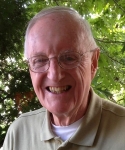
by Joseph Nangle, OFM
Pax Christi USA 2023 Teacher of Peace
Saint Paul is direct and unwavering in his first letter to the Christian community of Corinth on the subject of doubts among them regarding Christ’s resurrection: “How can some among you say there is no resurrection from the dead? If there is no resurrection of the dead, then neither Christ has been raised. And if Christ has not been raised, then empty is our preaching, empty too your faith… If for this life only we have hoped in Christ, we are the most pitiable people of all.” (1Corinthians 15:12-14, 19)
Nevertheless, the apostle to the Gentiles does not try to soften this teaching – “Let me put this teaching in another context” (so to speak). He goes immediately to the heart of the matter: “In [the risen] Christ all shall be brought to life.” (1 Corinthians 15:21) In their defense it must have been a great challenge for this fledgling community of believers to hold on to Paul’s proclamation of the One who died and lives, situated as they are in the cosmopolitan crossroads of a grecian city. It isn’t difficult for us to identify with such a challenge given our current historical place in the secular United States.
On the other hand, in our case we now know that generations after generations have celebrated Easter Day and the seven weeks of the Easter Season as the absolute pinnacle of the liturgical year. We have the great advantage of inheriting a decidedly communal belief in Christ’s Resurrection.
Theologian Jon Sobrino, SJ puts it this way: “Faith in Christ is essentially a community faith and not the sum of individual faiths; and this has been true since the resurrection of Christ… which called into being a community… in which faith had communality as an essential dimension.” (Jesus the Liberator, page 29)

To celebrate once again our common belief in the incredible fact that one of us has passed through the gateway of death and lives, we recall here some of the panoply which our Christian-Catholic tradition gives us. These are moments in the annual Easter Vigil each of which draws us more deeply into in the mystery of Christ’s resurrection.
First, we light “the new fire” and from it the Paschal candle marking it with a cross and the current year of salvation history. We carry the candle into the church, pausing three times to proclaim “Christ our light – Thanks be to God.”
Then the community hears sung the soaring music and words of the Easter proclamation: “Exult, let them exult, the hosts of heaven, exult, let angel ministers of God exult, let the of trumpet of salvation sound aloud our mighty King’s triumph! Be glad, let earth be glad, as glory floods her, ablaze with light from her eternal King, let all corners of the earth be glad, knowing an end to gloom and darkness. Rejoice, let Mother Church also rejoice, arrayed with the lightning of his glory, let this holy building shake with joy, filled with the mighty voices of the peoples.”
Next come readings from the Hebrew Scriptures which cite peak moments in the centuries before Christ’s coming.
We then hear St. Paul’s reminder that we have been baptized into the death and resurrection of Christ; the baptismal water is blessed; new Catholics are baptized and confirmed; the Assembly repeats its own baptismal promises.
Finally and above, all on this blessed night the Eucharist is celebrated. The church is illuminated, the singing is exuberant, the white liturgical vestments speak of newness, the atmosphere is beyond joyous.
In the midst of this rich symbolism comes a simple gesture: Bread and wine and Christ’s words spoken over them as at the Last Supper. He said: They become Him, the Risen Christ. We take this action because He commanded: “Do this in remembrance of me.”
We remember again that we are Easter people! Alleluia is our song.
Joe Nangle OFM is a Pax Christi USA Ambassador of Peace and the 2023 Pax Christi USA Teacher of Peace. As a member of the Assisi Community in Washington, D.C., he is dedicated to simple living and social change. Joe also serves as the Pastoral Associate for the Latino community at Our Lady Queen of Peace, Arlington, Virginia.
We as the body of the faithful believe that our death will bring us to an everlasting spiritual life as real as our temporal life. We have no idea what that life might
be and our belief will put us entirely with God our Source and that we will be happy beyond imagination. We have traditionally likened this rebirth to the imitation
of earthly functioning with its rewards and punishments. That belief orders our behavior now so that we are given Heaven as a reward. We might want to rethink this belief in the context of the Nature of a loving God who sees deeply into our human nature. That asks us to put forgiveness forward so that we must forgive those we label as enemies despite their continued aggression. We must stop waring and fogive remembering that victory is not peace and that war blinds us to the loving nature of God. This could be the only path to peace in our troubled world.