
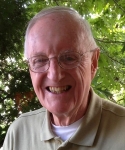
by Joseph Nangle, OFM
Pax Christi USA 2023 Teacher of Peace
National Catholic Schools Week (January 28-February 3) reminds one of an outstanding example of the prophetic dimensions possible and necessary in Catholic education. That is, the story of the Universidad de Centro America (UCA) in San Salvador, El Salvador. Founded in 1965 by the Jesuits, the university became well known in the decade of the 1980s, the years of El Salvador’s civil war.

The conflict was a popular uprising against military/political regimes which had oppressed that country for decades. World-renowned Jesuit theologian Jon Sobrino has become the principal expositor of the central role which he and his Jesuit brothers played (and continue to play) in this ongoing struggle. Against the horrific background of the brutal murder of six Jesuit leaders of the UCA by forces of repression on November 16, 1989, Sobrino, the only survivor of that massacre, has written extensively on why these priests (and two women employees) were killed: “These Jesuits wanted to free the truth from the slavery imposed by oppressors, cast light on lies, bring justice in the midst of oppression, hope in the midst of discouragement, love in the midst of indifference, repression and hatred. That is why they were killed.” And all of this took place in the context of Catholic education. It was said that even the university campus became a refuge for the many groups of poor Salvadorans who continually organized to deal with the revolution.

Another observer put it this way: “[The Jesuits of the UCA] resisted the oppressive policies of the government… [and] were regarded as subversive, disloyal and dangerous. They refused to be silenced and paid the price with their lives.”
In carrying on this prophetic educational ministry, they were implementing a decree from their Order’s 1975 general meeting entitled “Our Mission Today: The service of Faith and the Promotion of Justice.” Under the leadership of their visionary, then-Superior General Father Pedro Arrupe, the entire Order took up his mantra: “A faith that does justice.” It led him to see that the task of Jesuit educators was to “form women and men for others.” In the Latin American/Salvadoran context this was a dangerous proposition.
Arrupe’s vision remains alive. Some years after the martyrdom of the Jesuits and their employees, a Jesuit from the United States, Dean Brackley, who went to replace his martyred brothers at the UCA, said: “The measure of our success lies in who our students become, evidenced by their ‘downward mobility’ in showing up to the marginalized and excluded, taking responsibility for healing a broken and sinful world.”
The story of the UCA presents fundamental challenges to Catholic education at every level. As one professor at a Jesuit college in the U.S. put it: “Today, many people think that college is a commodity, reducing it to preparation for a profession, or focusing on the ‘return investment’ in the cost of tuition.” However, the challenges are not confined to graduate and post-graduate centers of learning.
It can be asked, are our Catholic grade schools introducing children to basic values such as the sacredness and equality before God of every person? Are our high schools presenting the principles of Catholic Social Teaching such as the rights of workers, the ideals of nonviolence, concern for our Mother Earth? Are our Rite of Christian Initiation of Adults programs presenting the ideals of justice, peace and care for creation as essential for living the Gospel? Is our preaching regularly a proclamation of a “faith that does justice”? Are our seminaries teaching future priests that “action on behalf of justice and participation in the transformation of the world… are a constitutive dimension of the preaching of the Gospel”? (1971 Synodal Statement)
Basically, the question is: Does Catholic education, broadly understood, domesticate us to accept the status quo, or revolutionize us to oppose what is antithetical to the Reign of God in U.S. culture and the U.S. church?
Joe Nangle OFM is a Pax Christi USA Ambassador of Peace and the 2023 Pax Christi USA Teacher of Peace. As a member of the Assisi Community in Washington, D.C., he is dedicated to simple living and social change. Joe also serves as the Pastoral Associate for the Latino community at Our Lady Queen of Peace, Arlington, Virginia.
I agree with Joe Nangle’s essay and the principles he restates. My question is, what evidence is there to show their effectiveness or lack thereof on graduates of Catholic schools at all levels?
Father Nangle, your ending question to us is very important. Are we assessing the answer to the question? and as George Marsh asks is there evidence of the schools effectiveness? Thank you.
Father Joe asks: “Does Catholic education, broadly understood, domesticate us to accept the status quo, or revolutionize us to oppose what is antithetical to the Reign of God in U.S. culture and the U.S. church?”t
Personally, I see little or no evidence of Catholic School students taking a stand in opposition to the acts of genocide supported by their national US government. Conversely, Catholic students are in lockstep with militarism .Catholic High Schools and colleges are infused with miliarism. Please show me the masses of Catholic students in the streets opposing US terrorism and the US sendng of weapons to terrorist nations. Where were the US high schools and colleges as their US government slaughtered people in Vietnam, Panama, Afghanistan, Iraq, Syria, Ukraine, etc. and now in Gaza? Why are Catholic school teachers and administrators so afraid to speak up and to encourage their students to stand up in opposition to the immoral, unjust and illegal actions of the US government?
Shamefully, the RC Church has become a partner in the crimes of he Pentagon not just by its silence but its support and blessing of the Roman Catholic Archdiocese of the US Military. Fr Joe is just a metro ride to the Washington DC Headquarters of Roman Catholic collaboration with the war makes.
How about Catholic School kids doing a sit down at RC Archdiocese for the military?
Jack Gilroy
Jack Gilroy is spot on. Please, everyone, read his comment.
David-Ross Gerling, PhD
What about reading, writing and arithmetic? Too controversial?