


by Joseph Nangle, OFM
Pax Christi USA Ambassador of Peace
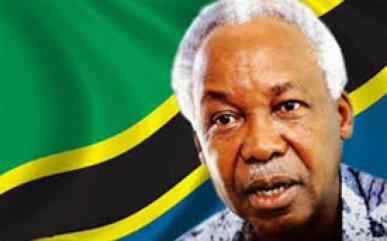
Liturgically, the month of November calls us to remember people whom we consider saints, many of whom have gone unrecognized as such, even by Catholics. One such person is Julius Nyerere, called the father of his country, Tanzania, in East Africa.


For several reasons he deserves attention. He was a religious man in the best sense of the term – a devout Catholic, but not uncritical of the institutional Church and someone who brought to his professional life Catholic social teaching, as evidenced by the policies he introduced and cultivated as the three-term president of his fledgling country.
Nyerere’s story is a textbook study of what Aristotle said: that the ethical and virtuous life is only available to someone who participated in politics; and the Catholic version of the same from Vatican Council II: “The lay person engages himself (sic) wholly and actively in the reality of the temporal order and effectively assumes his role in conducting the affairs of this order” (Document on the Laity).
Julius Nyerere moved through several stages of political involvement beginning in his 20’s. He became instrumental in what was Tanganyika’s (later Tanzania) struggle for independence from its status as a United Nations Trust Territory under British administration. He led the creation of the country’s first political party, working toward ideals of independence based on nonviolent, multiethnic politics and the promotion of social and political harmony. Tanganyika gained limited independence in 1960, complete independence in 1961. In December of 1962 Nyerere was elected Tanzania’s first president, was consistently reelected to that office until he voluntarily resigned in 1984. He was a force among other African nations of that time. He led the creation of the Organization of African Unity, now known as the African Union. He prevented South Africa from joining the Union because of that country’s apartheid structures.

Nyerere once described these struggles with this metaphor: “If the door is shut, attempts would be made to open; if it is ajar, it should be pushed until it is wide open; in neither case should the door be blown up at the expense of those inside.”
Several hallmarks of this man’s presidency stand out:
- integration of African politics with the traditional style of African consensus where everyone’s voice is heard
- unification of the nation through a common language (Kiswahili)
- national programs of self-help (the famous Ujama vision)
- independence from foreign aid
- economic cooperation
- racial/tribal and moralistic self-sacrifice
- significantly President Nyerere helped formulate the religious articles in his nation’s Constitution focusing on the right to religious freedom (particularly for Tanzania’s Muslim populations) and tolerance in matters of faith
Such high ideals were perhaps unrealistic in the world of the 20th century. Tanzania remains one of the poorest nations in Africa. However, under Nyerere it enjoyed the highest literacy rate in the continent (98%!!), infant mortality was cut by 50%, and above all, political stability was maintained.
President Nyerere’s political work was informed by his Catholic faith, especially the Church’s rich social teaching. He knew of the historical encyclical of Pope St. Paul VI, On the Development of Peoples, that said: “Peace is the result of an ever-precarious balance of forces… built up day after day [politically] in the pursuit of an order intended by God.” He also challenged his Church insisting that regarding needed social revolution “only by activities in these fields can the Church justify its relevance in the modern world.” [The bishops of Tanzania have reportedly begun the process of Nyerere’s canonization.]
How can anyone, especially us of Pax Christi, not be edified and challenged by “one of ours” as we also engage in the politics of our times? All the ideals, the compromises, the successes and failures involved in working in the public sphere were the raw materials of Julius Nyerere’s God-given vocation and his pathway to sanctity.
Thus we say: “Julius Nyerere – Presente! Pray for us!”
____________
Joe Nangle OFM is a Pax Christi USA Ambassador of Peace. As a member of the Assisi Community in Washington, D.C., he is dedicated to simple living and social change. Joe also serves as the Pastoral Associate for the Latino community at Our Lady Queen of Peace, Arlington, Virginia.