


former National Council Chair, Pax Christi USA
In April 1963, Dr. Martin Luther King, Jr. wrote an exceeding long letter while in a jail cell. The letter is addressed to eight Birmingham clergy members, responding to their criticism that now is not a good time for standing up for what is right and just. Forty-nine years later in April 2012, while discussing the unfair treatment from a supervisor, an African American is advised by the African American Human Resource Director to ‘tone it down’ because “white people don’t understand African Americans.” If not now, when?
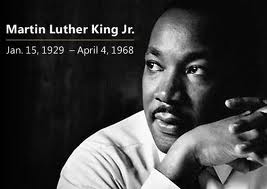
Dr. King did come to realize that it was not only ‘Negros’ that were not afforded access to the basic necessities. He recognized that the poor of all racial groups lived alongside and amongst the Negros, especially in the north. Since 1968, accessibility has improved and yet studies still show economic disparities inside of the racial disparities in education, income, health and housing. Having access to the basic necessities would start to become accessible as long as we continue to chip away at the race issue.
Across the United States, on the third Monday of January there will be music, speeches and good deeds to celebrate the life and achievements of the Rev. Dr. Martin Luther King, Jr. Our society has changed tremendously since the days of Martin Luther King, Jr. The terminology that Dr. King used such as ‘we, our, us’ are not part of our everyday language. We now live in a ‘me, I, mine’ society, a society of self-centeredness, self-absorption and fifteen minutes of fame. We no longer live in a society that believes that our brother’s problem is our problem. How do we begin to unite our splintered groups? “… We are called to speak for the weak, for the voiceless, for the victims of our nation, for those it calls “enemy,” for no document from human hands can make these humans any less our brothers.” (Beyond Vietnam, April 1967) Martin and Coretta wanted to give back to those whose shoulders they stood on. Martin and Coretta wanted to make a difference in their society. As we stand on the shoulders of Martin and Coretta, what difference will we make?
Reflection Questions:
- How can you and/or your group narrow the racial divide that will in turn narrow the economic divide?
- Can you and/or your group define and recognize internalized oppression and internalized superiority? In yourself? In your group? In your family? In your community?
For further reflection:
As a group or individual, participate in the Martin Luther King, Jr. holiday celebration in your community. Afterward:
- Reflect on the purpose and outcome of the celebration. Did this event address and continue the work of Martin Luther King, Jr.?
- Is there a concrete plan to be carried out in the upcoming year?
- Are there elements of internalized oppression and internalized superiority present? What can I do?
Read Dr. King’s Letter From Birmingham Jail, April 1963.
- Do his comments resonate with actions of today?
- What are the issues today that are considered ‘unwise and untimely’?
- Develop a plan using the four-step approach of collection, negotiation, self-purification and direct action.